
How to Build a B2B Messaging Framework
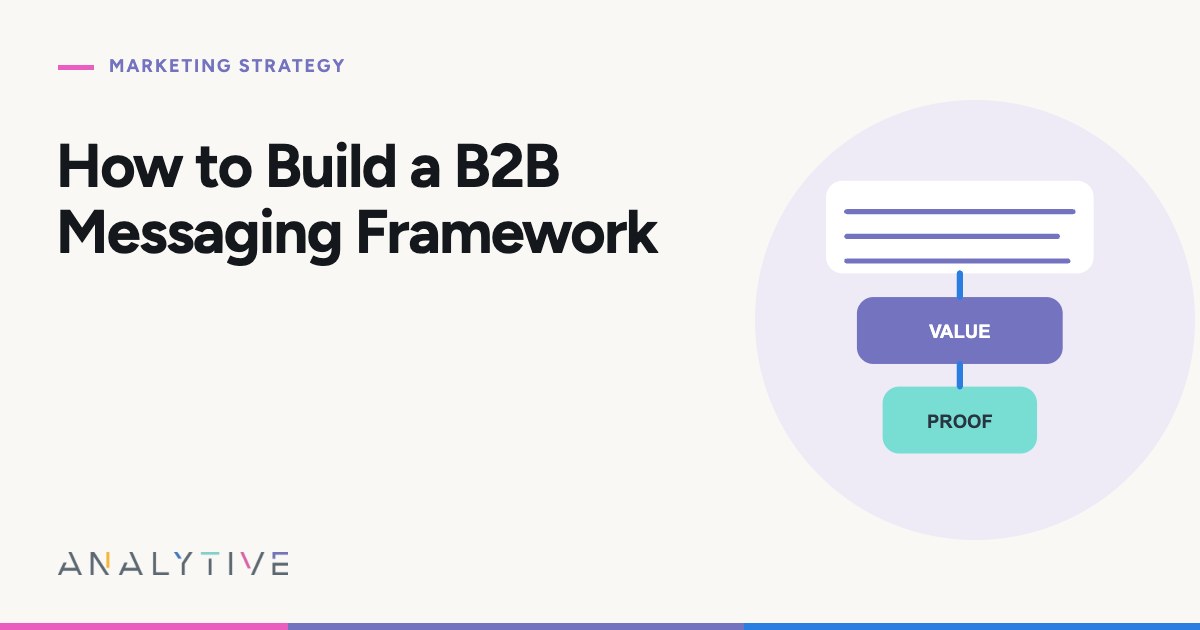
A B2B messaging framework connects a specific buyer's problem to your offer, the evidence behind it and a reasonable next step. Build it by choosing one buying situation, defining the value proposition and arranging the main message, supporting points and proof in a reusable map. The framework should guide your website and sales conversations without making every channel sound identical.
Key Takeaways
- Start with the buyer's situation and decision, not a list of adjectives about your brand.
- Separate the value you promise from the proof you can provide today.
- Use one primary message with a small set of supporting points, objections and next steps.
- Test the framework with actual buyers and sales conversations before treating it as settled.
Define the buying situation
“B2B companies” is too broad an audience for a useful message. Name the person, the work they own and the event that makes them consider a change. An operations manager preparing for a multi-location review needs a different explanation than an IT manager evaluating data access.
Record what the buyer uses now, why that approach may no longer fit and what would make switching difficult. Include the option to keep the current process. A framework built around a fair understanding of alternatives is more credible than one that dismisses spreadsheets, internal teams or every competing product.
Use interviews, support questions and sales notes as inputs you are authorized to use. Keep identifiable customer details out of public examples. A few conversations can reveal language and objections, but they do not prove how the entire market thinks.
Build the framework in six parts
| Part | Question to answer | Useful output |
|---|---|---|
| Audience and trigger | Who is deciding, and why now? | One specific buying situation |
| Problem | What observable task is difficult? | A concrete description of the current friction |
| Value proposition | What useful change can the offer support? | Audience, task and mechanism in plain language |
| Message hierarchy | What should the buyer understand first? | One primary message and two or three supporting points |
| Proof and limitations | What substantiates the promise? | Demonstration, documented fact or permitted evidence, with boundaries |
| Objection and next step | What uncertainty blocks progress? | A useful answer and a proportionate call to action |
Download the editable B2B message map or use the CSV version. It includes blank prompts beside a fictional example. Open it in LibreOffice Calc, Excel or your own Google Sheet.
A worked B2B messaging example
Imagine a fictional software company that organizes equipment-inspection records. Its initial message is “An innovative platform for modern operations.” That gives the buyer little help deciding whether the product fits.
For an operations manager preparing records across several locations, a more useful primary message could be: “Bring location inspection records into one review workflow.” A supporting point might explain that each record has an owner and status. Another could describe how a manager searches and exports a review packet, if the product can demonstrate those functions.
The proof should match the claim. A live demo can show the upload, search and export process. It does not substantiate a claim that every customer saves ten hours a week, passes an inspection or becomes compliant. Those promises need different evidence and may not belong in the message at all.
The buyer's objection might be, “Will we lose our existing fields or access to our records?” Answer with the verified import/export behavior and limits. A reasonable next step is to review a sample workflow, rather than asking for a purchase before resolving that uncertainty.
This example is invented to show the method. It is not a client case study or a description of a product we sell.
Turn the map into a message hierarchy
The primary message should carry the main reason to consider the offer. Supporting messages explain how it works or which concerns it addresses. Proof sits beside the relevant claim, not in an unrelated list of logos or awards.
For a website, lead with the buyer and task, then show the mechanism, evidence and next step. A sales presentation can use the same structure with more detail. An advertisement may need one narrow promise that its landing page develops. Keep the meaning consistent while adapting the depth to the channel.
If different buyers require conflicting messages, create separate audience versions with clear ownership. Avoid packing every department, feature and use case into one headline.
Test comprehension before polishing the language
Show the draft message to people who resemble the intended buyer. Ask what they think the company does, who it helps and what they would need to know before continuing. Avoid asking whether they “like” your preferred headline and then treating agreement as purchase intent.
Record misunderstandings, unanswered questions and the language people use themselves. Compare changes with a consistent method; the brand-perception measurement guide includes survey prompts and source-quality checks.
Check the final message against the product or service as it exists. Remove vague superlatives and unsupported outcomes. The clearest phrasing can still be misleading if it promises a capability, price or result you cannot deliver.
How is a messaging framework different from positioning?
Positioning defines how the offer should be understood relative to the buyer's alternatives. The messaging framework translates that choice into the claims, explanations and proof you use. They inform one another, but a message map cannot repair an offer whose audience or differentiation remains unresolved.
Should the framework include a tagline?
It can, but the tagline is optional. Start with the concrete buyer problem, value proposition and proof. A short phrase is useful only if the surrounding message makes its meaning clear.
For the broader channel and buying-process context, see what B2B marketing means. If you want help turning your offer into a coherent website and campaign message, talk with Analytive.
Want to find your highest-leverage opportunities?
Book a strategy session and we will help you find the actions that move revenue.
LET'S GET STARTED